
Andrei Morari, Dima
Exhibition Opening: 10 June 2026, 4 p.m.
On view: 10 June – 11 July 2026
tranzit.ro/ Iași, Str. Sf. Atanasie nr. 25, Iași, Romania
Soviet cinema of the early twentieth century developed one of the most ambitious theories of documentary filmmaking. Vertov believed the camera to be a device “more perfect than the human eye, for the exploration of the chaotic visual phenomena that fill space” — not simply recording reality, but uncovering it. Unscripted shots, non-professional subjects, the candid camera — these were tools of truth-telling, bound to a political purpose. “Not candid shooting for its own sake,” Vertov wrote, “but in order to show people without a mask, without makeup, to catch them with the eye of the camera in a moment of non-acting.” The image was meant to serve a historical argument. Postmodern criticism challenged this idea, showing that every image is shaped by who makes it — their background, beliefs, and the social conditions they inhabit. Pasolini, in “The Cinema of Poetry,” put it plainly: “the spontaneous choice of images by the director is inevitably determined by his ideological and poetic vision of the world at that moment.” What appears on screen is not a window onto reality, but a particular way of seeing it.
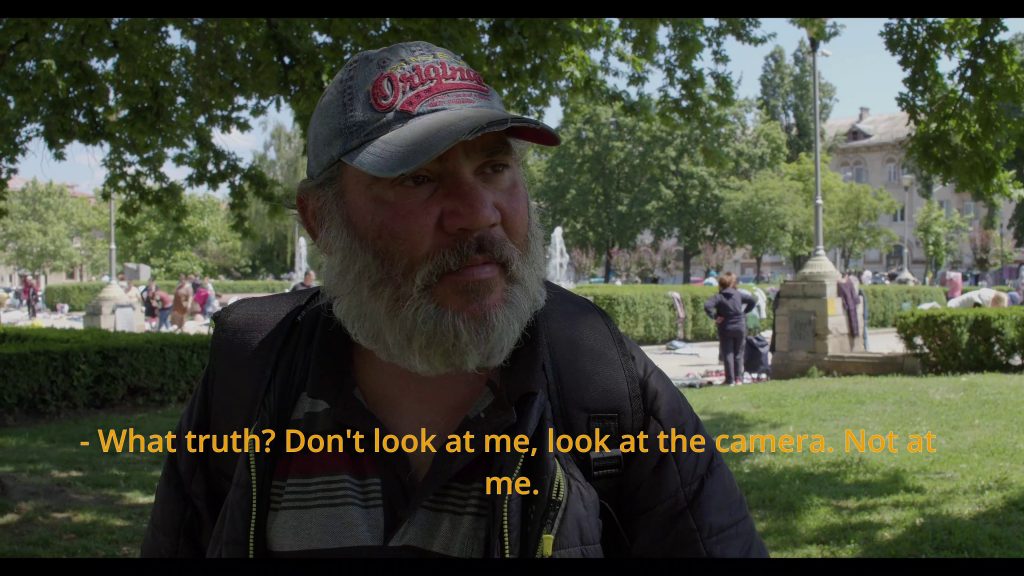
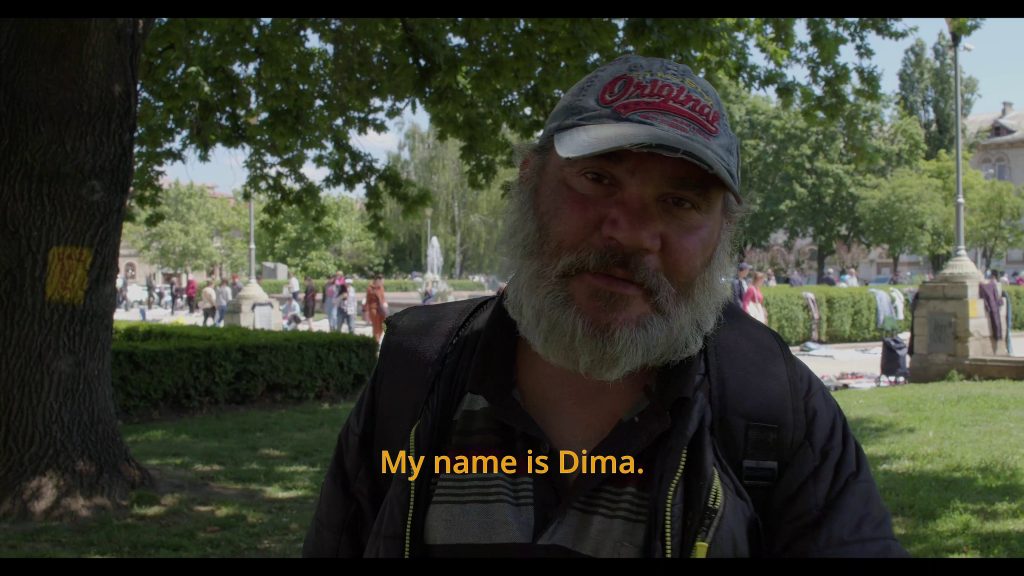
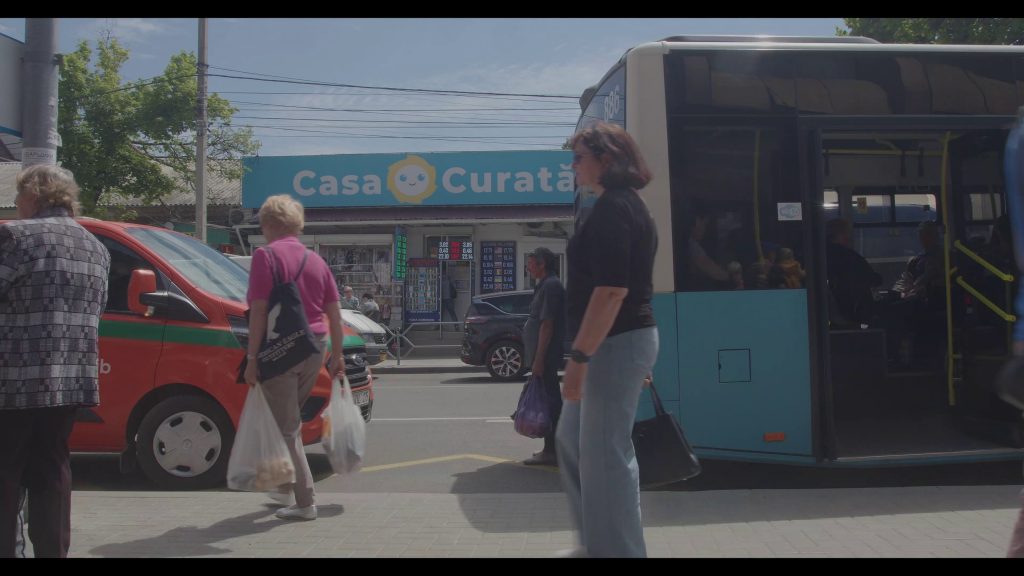
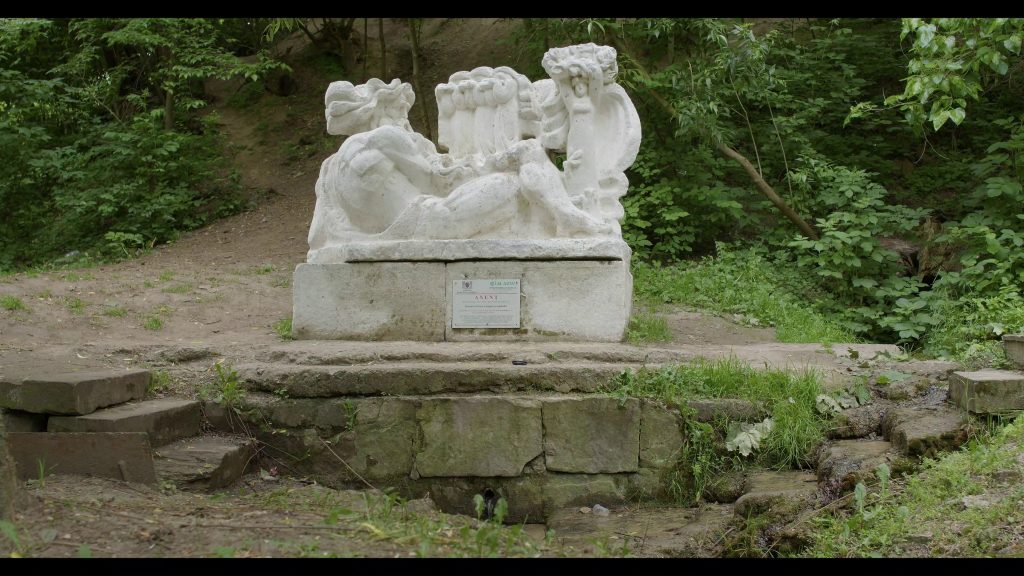
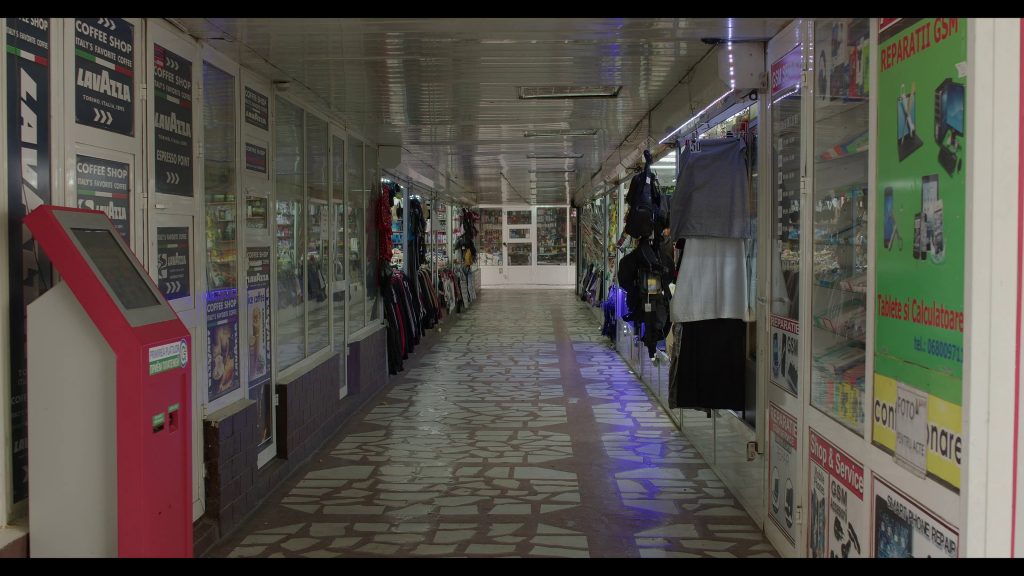
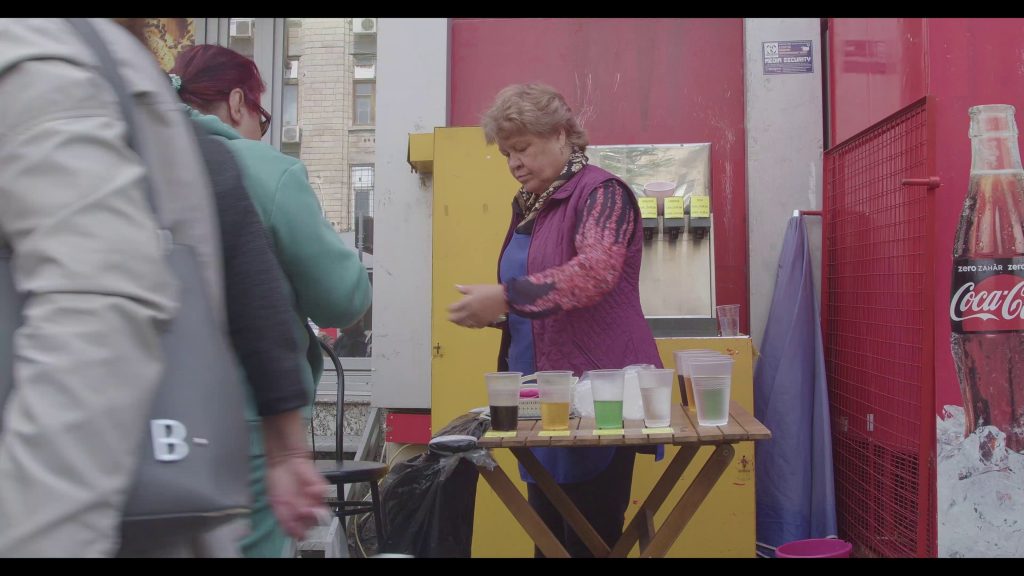
This exhibition is the result of an experiment situated between these two ideas. Dima was made using methods borrowed from the early avant-garde — no script, no staging, no editing — but without the certainty that drove them. The work claims no special access to truth and offers no political message. Instead, it accepts that what it shows is inseparable from the experience, relationships, and circumstances of the person who made it. Perhaps this honesty is what allows the documentary approach to remain meaningful today. Observation without an agenda still records — exclusion, silence, inequality. Reality, it seems, speaks for itself. The language of cinema keeps changing. “Cinema is not the reflection of reality,” Godard wrote, “but the reality of the reflection” — a reminder that the search for new forms is always also a search for new ways to see. For me, this experiment is an attempt to turn the invisible, the hidden, the dismissed sides of life into something worth looking at: work that might prompt reflection, and perhaps a little more openness toward those who rarely get to speak.
(Andrei Morari, 21 march 2026)
Andrei Morari, 25 years old, student of the Multimedia Faculty at the Academy of Music, Theatre, and Fine Arts in Chișinău; member of the publishing cooperative Iskra and of the collective 3-rd Space Studio at the cultural center Zemstvo Museum. With an extensive experience in cultural work, his areas of interest include samizdat, experimental music, cinema, and photography. As a student in the Film and Television Directing program, Andrei completed several projects that serve as studies of certain social groups represented in the Republic of Moldova.
Andrei Morari, Dima
Vernisaj: 10 iunie 2026, ora 17.00
Expoziție deschisă: 10 iunie – 11 iulie 2026
@tranzitiasi, Strada Sf. Atanasie 25, Iași
Cinematografia sovietică de la începutul secolului XX a dezvoltat una dintre cele mai ambițioase teorii ale filmului documentar. Vertov considera că aparatul de filmat este un dispozitiv „mai perfect decât ochiul uman, pentru explorarea fenomenelor vizuale haotice care satureaza spațiul” — nu doar înregistrând realitatea, ci dezvăluind-o. Cadrele neplanificate, actorii neprofesioniști, camera ascunsă — erau instrumente de revelare a adevărului, legate de un scop politic. „Nu filmare ascunsă de dragul ei”, scria Vertov, „ci pentru a arăta oamenii fără mască, fără machiaj, pentru a-i surprinde cu ochiul camerei într-un moment de non-actorie.” Imaginea era menită să servească un argument istoric.
Critica postmodernă a contestat această idee, arătând că fiecare imagine este modelată de cel care o realizează — de formația sa, de convingerile sale și de condițiile sociale în care trăiește. Pasolini, în „Cinematografia poeziei”, a spus-o limpede: „alegerea spontană a imaginilor de către regizor este inevitabil determinată de viziunea sa ideologică și poetică asupra lumii în acel moment.” Ceea ce apare pe ecran nu este o fereastră către realitate, ci un mod particular de a o vedea.
Această expoziție este rezultatul unui experiment situat între aceste două idei. Dima a fost realizat folosind metode împrumutate de la avangarda timpurie — fără scenariu, fără regie, fără montaj — însă fără certitudinea care îi anima pe pionieri. Lucrarea nu pretinde un acces privilegiat la adevăr și nu propune niciun mesaj politic. În schimb, acceptă că ceea ce arată este inseparabil legat de experiența, relațiile și împrejurările celui care a făcut-o.
Poate că tocmai această onestitate este cea care permite ca abordarea documentară să rămână semnificativă astăzi. Observația lipsită de o agendă tot înregistrează — excluderea, tăcerea, inegalitatea. Realitatea, se pare, vorbește de la sine.
Limbajul cinematografiei se schimbă mereu. „Cinematografia nu este reflectarea realității”, scria Godard, „ci realitatea reflectării” — un îndemn să ne amintim că, mereu, căutarea unor forme noi este și o căutare a unor moduri noi de a vedea. Pentru mine, acest experiment este o încercare de a transforma laturile invizibile, ascunse, ignorate ale vieții în ceva ce merită privit: o lucrare care ar putea îndemna la reflecție și, poate, la puțin mai multă deschidere față de cei cărora rareori li se dă cuvântul.
(Andrei Morari, 21 march 2026)
+ 2 May 2026: Ghenadie Popescu, Childhood memories. Siberia 1941–1960, Exhibition
+ 26 April - 6 May 2026: Maria Hlavajova, Curatorial Residency
+ 10 June 2026: Andrei Morari, Dima, Exhibition
+ 8-15 June 2026: Minna Henriksson & Sezgin Boynik, Iskra (The Spark)
+ 10 June 2026: Online Seminar (I)
+ July 2026: Baran Caginli, Lost and Found, Exhibition
+ 24 July 2026: Victor Ciobanu, Study for the Book of Debt
+ 22-27 July 2026: Imagined Organisations, International Gathering
+ 26 August 2026: Online Seminar (II)
+ 4 October 2026: Cristina David, Postcards from Mars, Exhibition
Images: Andrei Morari, Dima, 2026
Co-organised by 1+1 Association and tranzit.ro/ iași in partnership with HDK-Valand Academy of Art and Design, Centre for Art and the Political Imaginary (CAPIm), Oberliht Association, the doctoral schools of the “George Enescu” National University of Arts Iasi (UNAGE Iași) and is co-financed by the Administration of the National Cultural Fund (AFCN). Tranzit.ro/ Iasi is part of tranzit.org network. The main partner of tranzit.org is the ERSTE Foundation.
This is a cultural project co-financed by the Administration of the National Cultural Fund (AFCN). The project does not necessarily represent the position of the Administration of the National Cultural Fund. AFCN is not responsible for the content of the project or for the way the project results can be used. These are entirely the responsibility of the beneficiary of the funding.
Acesta este un proiect cultural co-finanțat de Administrația Fondului Cultural Național (AFCN). Proiectul nu reprezintă în mod necesar poziția Administrației Fondului Cultural Național. AFCN nu este responsabilă de conținutul proiectului sau de modul în care rezultatele proiectului pot fi folosite. Acestea sunt în întregime responsabilitatea beneficiarului finanțării.
Co-organizat de Asociația 1+1 și tranzit.ro/ Iași în parteneriat cu HDK-Valand Academy of Art and Design, Centre for Art and the Political Imaginary (CAPIm), Asociația Tinerilor Artiști Oberliht , Universitatea Națională de Arte “George Enescu” Iași și co-finanțat de Administrația Fondului Cultural Național (AFCN). Tranzit.ro/ Iasi este parte a rețelei tranzit.org. Partenerul principal al tranzit.org este Fundația ERSTE.